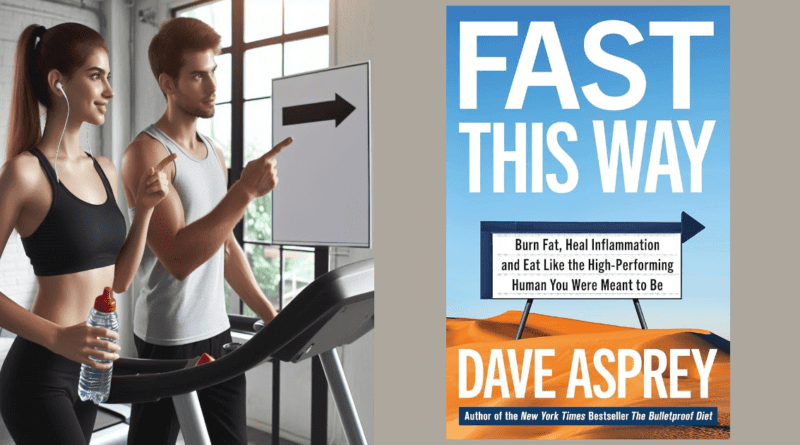
Fast This Way Review: Clinical Assessment of Intermittent Fasting Claims
Direct Answer: Does the Science Support the Claims in Fast This Way?
Clinical research supports core intermittent fasting benefits such as modest calorie reduction, improved insulin sensitivity, and weight loss comparable to continuous calorie restriction. However, several claims in Dave Asprey’s Fast This Way, including butter and MCT coffee preserving a true fast, rapid human autophagy timelines, and universal cognitive gains, exceed current human clinical evidence.
The Biological “Why”: Insulin, Lipolysis, Autophagy, and “Fat Fasting”
Dave Asprey’s Fast This Way frames intermittent fasting as a flexible biohacking toolkit designed to curb hunger while optimizing cellular repair and focus. To evaluate the book fairly, it helps to separate established human metabolic physiology from emerging hypotheses and marketing-driven hacks.
Established Metabolic Shifts During Time-Restricted Eating
When you stop consuming calories for 12 to 16 hours, circulating insulin declines, allowing hormone-sensitive lipase to mobilize stored triglycerides from adipose tissue. The liver converts a portion of those fatty acids into ketone bodies (primarily beta-hydroxybutyrate) for brain and muscle fuel. According to clinical research—including randomized controlled trials published in the New England Journal of Medicine and JAMA Internal Medicine—time-restricted eating such as a 16:8 schedule can reduce body weight by 3% to 5% and improve fasting insulin, though weight-loss outcomes are broadly similar to calorie-matched daily eating.
Evaluating Butter-and-MCT Coffee During a Fast
A signature protocol in Fast This Way suggests blending grass-fed butter and medium-chain triglyceride (MCT) oil into morning coffee without “breaking” the fast. In practical terms, pure fat causes negligible insulin secretion, and caprylic acid (C8 MCT) rapidly converts into ketones that may blunt appetite for busy professionals. Biochemically, however, consuming 200 to 400 kilocalories of dietary fat introduces exogenous energy that your body must oxidize before tapping further into stored body fat. Calling a 300-calorie coffee a fasted state blurs the line between appetite management and true energy restriction.
Autophagy Timelines and Endocrine Sensitivity
Autophagy—the cellular housekeeping process that recycles damaged proteins—is heavily emphasized in popular fasting books. While rodent studies demonstrate robust autophagy increases after 24 to 48 hours without food, direct measurement of tissue-specific autophagy in humans remains technically challenging and falls under emerging rather than settled clinical evidence. Furthermore, aggressive daily fasting windows can elevate cortisol and disrupt reproductive or thyroid signaling in some peri-menopausal women, lean athletes, and high-stress individuals.
Fast This Way Claims vs. Peer-Reviewed Clinical Evidence
| Book Claim or Protocol | Proposed Mechanism | Clinical Evidence Rating | Practical Clinical Takeaway |
|---|---|---|---|
| 16:8 Time-Restricted Eating for Fat Loss | Lowers insulin and shortens daily eating window | Established (comparable to calorie-matched diets) | Effective adherence tool if total daily energy and protein targets are met |
| Butter & MCT Coffee Preserves a True Fast | Minimal insulin response; ketones blunt hunger | Mixed / nuanced (ketogenic, not zero-calorie) | Supplies 200 to 400 kcal; useful only if counted within daily calorie goals |
| Short Daily Fasts Maximize Human Autophagy | Nutrient deprivation activates AMPK and cellular cleanup | Emerging / unproven for 12 to 16 hour windows | Do not rely on brief fasts as a guaranteed cellular-longevity trigger |
| Prebiotic Fiber & Black Coffee Support Adherence | Suppresses ghrelin and supports gut short-chain fatty acids | Established supportive physiology | Unsweetened coffee or tea helps hunger; save prebiotics for the eating window |
| Fasting Suits Nearly Everyone Equally | Universal metabolic flexibility | Contradicted by clinical nuance | Peri-menopausal women, athletes, and stressed adults often do better with gentler 12:12 windows |
Practical Application: How to Apply Fasting Safely Without Biohacking Extremes
Here is how this may help you capture the real benefits of time-restricted eating without unnecessary rules or expensive add-ons:
- Start With Circadian Alignment (12:12 to 14:10): Finish dinner two to three hours before bed and delay breakfast slightly rather than skipping food until mid-afternoon. Earlier eating windows align better with natural diurnal insulin sensitivity.
- Keep True Fasts Zero-Calorie: If fat loss is your primary objective, stick to water, plain electrolytes, black coffee, or unsweetened tea during fasting hours rather than adding 300 calories of butter and MCT oil.
- Protect Lean Muscle Inside Your Eating Window: Aim for 25 to 35 grams of high-quality protein per meal and pair fasting with resistance training so weight loss comes from adipose tissue rather than skeletal muscle.
- Break Your Fast With a Nutrient-Dense Approach: Prioritize protein, non-starchy vegetables, and slow-digesting fiber first to avoid sharp post-fast glucose spikes.
Frequently Asked Questions
Does black coffee break an intermittent fast?
Plain black coffee contains fewer than five calories per cup and does not meaningfully raise insulin or blood glucose. For weight-management and metabolic goals, black coffee or unsweetened tea is widely compatible with a fasted window.
Who benefits most from reading Fast This Way?
Busy professionals who struggle with late-night snacking often appreciate the book’s motivational framing around structured eating windows, provided they treat the more aggressive biohacking claims and supplement suggestions with clinical skepticism.
Can intermittent fasting cause muscle loss?
Prolonged fasting without adequate daily protein or resistance exercise can increase lean-mass loss. Meeting daily protein benchmarks (roughly 1.2 to 1.6 g/kg for active adults) inside a 14:10 or 16:8 window helps preserve muscle tissue.
Should women follow the same fasting schedule as men?
Not always. Some women—particularly those in peri-menopause, endurance training, or high-stress periods—experience fatigue, sleep disruption, or hormonal irregularity on strict 16:8 schedules and respond better to a 12- to 14-hour overnight fast.
Medical Disclaimer: This review is for informational purposes only and is not medical advice. Intermittent fasting is not appropriate for everyone, including individuals who are pregnant or breastfeeding, have a history of eating disorders, are underweight, or take glucose-lowering medications such as insulin or sulfonylureas. Consult your healthcare provider before starting any fasting regimen.