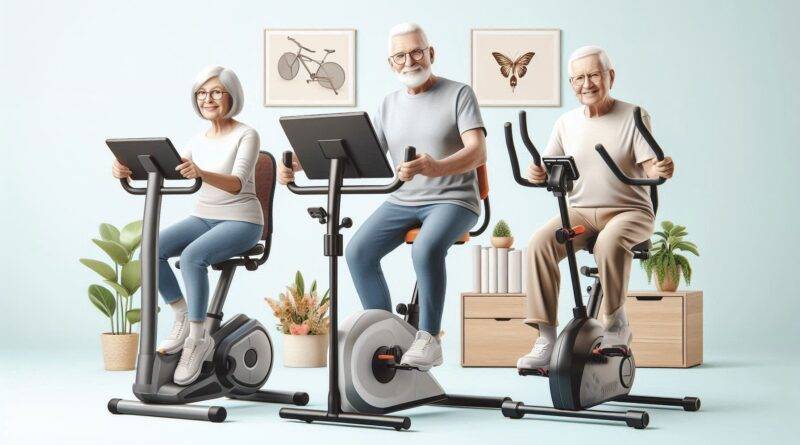
Low-Impact Cycling for Older Adults: Joint Ergonomics & Zone 2 Heart Health
Direct Answer: Which Stationary Bike Type Best Supports Healthy Aging?
Low-impact stationary cycling offers older adults a joint-sparing way to sustain Zone 2 cardiovascular training, supporting mitochondrial health and blood glucose regulation without jarring impact forces. Choosing between recumbent, upright, and under-desk bikes depends on hip mobility, lumbar support needs, and safe step-through frame ergonomics.
The Biological Why: Joint Ergonomics and Zone 2 Aerobic Capacity
According to clinical research, articular cartilage lacks a direct blood supply and relies on cyclical, low-load compression to circulate nutrient-rich synovial fluid. Unlike walking or jogging—which generate ground-reaction forces of roughly 1.5 to 3 times body weight—stationary cycling supports body mass through the saddle while moving the hip, knee, and ankle through smooth, controlled flexion.
In practical terms, this mechanical unloading allows older adults, peri-menopausal women, and individuals managing mild knee osteoarthritis to accumulate consistent aerobic minutes without next-day joint swelling. Sustaining Zone 2 intensity (typically 60% to 70% of age-predicted maximum heart rate, where full sentences remain comfortable to speak) stimulates mitochondrial biogenesis and capillary growth inside large quadriceps and gluteal muscle fibers.
Established clinical guidelines link regular moderate-intensity cycling to improved post-prandial blood glucose disposal, healthier arterial elasticity, and lower resting blood pressure. From an ergonomic standpoint, proper seat-height geometry—leaving a 25- to 30-degree knee bend at the bottom of the pedal stroke—prevents excessive patellofemoral compression and lumbar rounding.
Comparing Stationary Bike Archetypes for Older Adults
Rather than chasing high-wattage racing bikes, older adults and joint-sensitive riders benefit most from evaluating three distinct home bike categories based on frame stability, posture, and cardiovascular ceiling.
| Bike Archetype | Seat & Lumbar Ergonomics | Mounting & Balance Safety | Zone 2 Cardiovascular Ceiling | Best User Profile |
|---|---|---|---|---|
| Step-Through Recumbent Bike | Wide bucket seat with full backrest; reclined hip angle reduces lumbar strain | Very high; low open frame eliminates high leg-swing mounting | High; supports full 30- to 45-minute Zone 2 sessions smoothly | Adults with back stiffness, balance concerns, or knee sensitivity |
| Comfort Upright Bike | Cushioned vertical saddle; engages core postural stabilizers lightly | Moderate; look for low step-through shrouds and wide stabilizing feet | High; natural standing-like muscle recruitment for glutes and quads | Active older adults with solid balance seeking compact footprint |
| Under-Desk Pedal Exerciser | Uses an existing dining chair or sofa; posture depends on chair height | High when secured on a non-slip mat against a stable chair | Low-to-moderate; best for light circulation and breaking up sitting | Mobility-limited riders or remote workers countering sedentary hours |
Practical Application: Setting Up a Joint-Friendly Zone 2 Routine
Here is how this may help you turn a stationary bike into a sustainable daily habit without triggering hip flexor tightness or knee discomfort:
- Dial in seat distance before adding resistance: On a recumbent or upright frame, adjust the seat so your knee retains a gentle 25- to 30-degree bend at full extension. Over-extending locks the knee; sitting too close crowds the patella.
- Start with low magnetic resistance and smooth cadence: Pedaling at 60 to 75 revolutions per minute with light resistance keeps shear forces low while warming joint capsules during the first five minutes.
- Use post-meal timing for blood sugar stability: A 15- to 20-minute conversational ride 20 to 30 minutes after dinner engages skeletal muscle glucose uptake when post-meal glycemic load peaks.
- Build toward clinical benchmarks gradually: Progress toward 150 minutes of weekly Zone 2 cycling across four or five sessions, and pair cycling with two short weekly resistance sessions to preserve bone mineral density and leg strength.
Frequently Asked Questions
Is a recumbent or upright bike better for arthritic knees?
Both can be comfortable when fitted properly, though a step-through recumbent bike is often easier to mount and places less demand on balance. Regardless of style, avoid mashing heavy resistance gears at slow speeds; lighter tension with smooth revolutions protects the kneecap.
Can an under-desk pedal exerciser replace a full-size exercise bike?
In practical terms, compact pedal units are valuable for breaking up prolonged sitting and encouraging lower-leg circulation, which supports metabolic health. However, their lighter flywheels typically limit sustained Zone 2 heart-rate elevation compared with full-size recumbent or upright bikes.
How hard should Zone 2 cycling feel for older adults?
Zone 2 should feel steady and sustainable—roughly a 4 or 5 on a 10-point effort scale. You should feel mild warmth and deeper breathing while still able to speak in complete sentences without gasping.
Medical Disclaimer: This guide provides general wellness information and is not a substitute for professional medical evaluation. Older adults or individuals with balance disorders, recent joint replacement, dizziness, or cardiovascular disease should obtain clearance from a healthcare provider before starting a new exercise regimen.