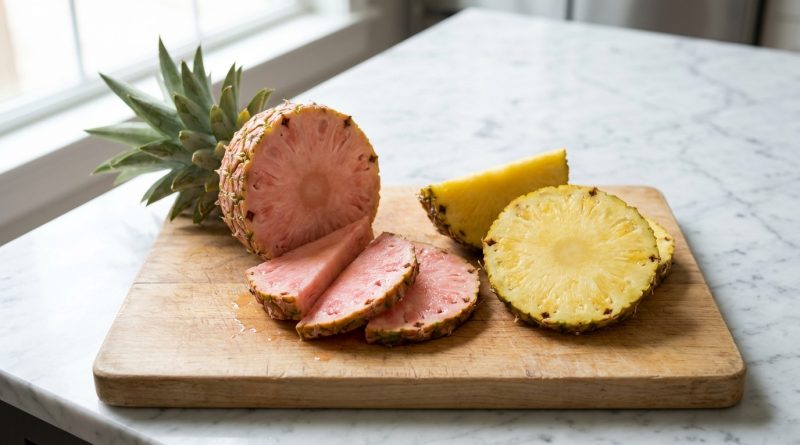
The Pink Pineapple: GMO Luxury or Toxic Trap?
Direct Answer: Is the Pink Pineapple Safe or Toxic?
Del Monte’s Pinkglow pineapple is a genetically engineered fruit reviewed as safe by the FDA and Health Canada, not a toxic trap. Scientists suppressed lycopene cyclase enzymes and upregulated phytoene synthase so the antioxidant pigment lycopene accumulates instead of beta-carotene, creating sweeter pink flesh with conventional pineapple nutrition.
The Biological Why: How Pinkglow Pineapple Gets Its Color
Priced anywhere from $10 to $30 per fruit in specialty grocery aisles and marketed without its leafy crown, the Pinkglow (or Rosé) pineapple quickly sparked debate among health-conscious shoppers. Some consumers assume the vivid blush hue comes from artificial food dyes or unsafe chemicals, while others wonder whether a genetically modified pineapple delivers superior antioxidant benefits.
According to clinical research and regulatory dossiers submitted to the U.S. Food and Drug Administration (FDA) and Health Canada under the designation Event EF2-114, the pink color is created by redirecting the fruit’s own natural carotenoid pathway—without synthetic dyes or foreign toxins. Every conventional pineapple naturally produces lycopene, the exact same carotenoid pigment responsible for the red color of ripe tomatoes and pink watermelon. In ordinary yellow pineapples, plant enzymes called lycopene beta-cyclase and lycopene epsilon-cyclase convert that pink lycopene into yellow beta-carotene as the fruit ripens.
To keep the flesh pink, Del Monte plant scientists made two targeted genetic adjustments:
- Boosting Precursor Production: They added an extra copy of a phytoene synthase gene sourced from tangerine (Citrus reticulata), which increases the flow of early carotenoid building blocks inside the fruit.
- Silencing Downstream Conversion: Using RNA interference (RNAi), they turned down the pineapple’s native lycopene cyclase genes so lycopene stops converting into yellow beta-carotene and accumulates inside the edible flesh instead.
Regulatory Safety and Compositional Equivalence
In December 2016, the FDA completed its voluntary biotechnology consultation for the extra-sweet pink-flesh pineapple and concluded there were no unresolved safety or regulatory questions under the Federal Food, Drug, and Cosmetic Act. Health Canada similarly evaluated Event EF2-114 and confirmed that its macronutrients, vitamins, minerals, and anti-nutrient levels remain comparable to conventional yellow pineapple, aside from the elevated lycopene concentration—averaging roughly 21.3 parts per million (ppm), slightly lower than fresh tomatoes (~26 ppm) and watermelon (~45 ppm).
Nutritional Comparison: Pinkglow vs. Conventional Pineapple
| Nutrient or Trait | Conventional Yellow Pineapple | Pinkglow (Rosé) Pineapple | Clinical & Dietary Takeaway |
|---|---|---|---|
| Primary Carotenoid Pigment | Beta-carotene (yellow) | Lycopene (~21.3 ppm average) | Both pigments are well-studied dietary antioxidants |
| Vitamin C & Manganese | High (~79 mg Vitamin C per 165 g cup) | Comparable to conventional pineapple | No meaningful micronutrient advantage in Pinkglow |
| Sugar & Acidity Profile | ~16 g sugar/cup; higher natural acidity | Similar total sugar; lower perceived acidity | Tastes milder and sweeter, though glycemic load is similar |
| Bromelain Enzyme | Active proteolytic enzymes in flesh/core | Present; often milder mouth tingle | Gentle on sensitive palates, likely due to lower acid |
| Regulatory & GMO Status | Conventional / Non-GMO | Bioengineered (reviewed safe by FDA & Health Canada) | Safe to eat; labeled as bioengineered under USDA rules |
Practical Application: Glycemic Context and Grocery Verdict
In practical terms, deciding whether to put a Pinkglow pineapple in your cart comes down to taste preferences, blood sugar management, and food budget rather than toxicity fears.
Glycemic Impact and Smart Pairing
Pineapple sits in the moderate glycemic index range (roughly 59 for fresh chunks), delivering around 22 grams of total carbohydrates and 16 grams of naturally occurring sugars per 1-cup (165-gram) serving alongside 2.3 grams of fiber. Because Pinkglow has lower organic acidity, it tastes sweeter on the palate, making it easy to overeat in one sitting. Here is how this may help keep post-meal blood glucose steady:
- Cap Portions at 3/4 to 1 Cup: Treat fresh pineapple as a bright meal component rather than a solo snack.
- Pair with Protein and Fat: Serve pineapple chunks alongside 3/4 cup of plain Greek yogurt, cottage cheese, or a small handful of raw macadamia nuts or walnuts to slow gastric emptying.
- Prioritize Whole Fruit Over Juice: Juicing strips away the intact cellular matrix and fiber, accelerating glucose absorption.
The Clinical Grocery Verdict
Is the Pinkglow pineapple a toxic trap? No—regulatory toxicology and compositional analyses confirm it is nutritionally equivalent to conventional pineapple and safe for regular consumption. At the same time, it is not a necessary upgrade for a nutrient-dense approach. If your goal is boosting dietary lycopene for cardiovascular or cellular health, cooked tomatoes, tomato paste, pink grapefruit, and watermelon provide equal or higher lycopene per serving at a fraction of the price. Buy Pinkglow as an occasional culinary treat if you love its low-acid, candy-sweet flavor; otherwise, standard yellow pineapple—and everyday lycopene-rich produce—delivers superior value.
Frequently Asked Questions
Why do Pinkglow pineapples arrive without their green leafy crown?
Del Monte removes the green crown at harvest before shipping because the crown can be replanted to propagate new bioengineered plants, which are protected under plant patent and intellectual property rules. The removed crowns are composted or replanted on licensed farms in Costa Rica.
Does Pinkglow pineapple still contain bromelain?
Yes. Bromelain—a complex of protein-digesting enzymes found throughout the Bromeliaceae family—is still present in Pinkglow pineapples. Many eaters notice less tongue sensitivity simply because the fruit has lower acidity and is harvested at full ripeness.
Is Pinkglow pineapple safe for children and during pregnancy?
Based on FDA and Health Canada safety assessments, Pinkglow pineapple is compositionally equivalent to conventional pineapple and contains lycopene at levels comparable to tomatoes and watermelon, making it safe in standard food portions for healthy adults and children unless an individual has a pineapple allergy.
Medical Disclaimer: This article is for informational and educational purposes only and does not constitute personalized medical or nutritional advice. Individuals with diabetes, insulin resistance, oral allergy syndrome, or known pineapple sensitivities should monitor portion sizes and consult a healthcare provider or registered dietitian regarding individualized dietary choices.